
The PestBye Ultrasonic Cat Repeller
The flagship battery-operated cat repeller used by tens of thousands of British gardeners. A PIR sensor watches a 12 m arc across your garden and fires a short, sharp ultrasonic pulse the moment it spots an unwanted visitor.

Compare solar, spray and fox options
Gardeners often pair the battery ultrasonic stake with these alternatives—check live retailer pricing on each.
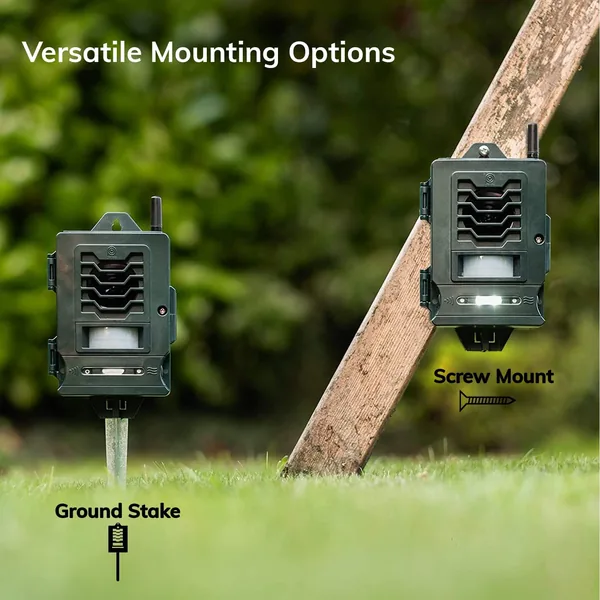
Ultrasonic Smart Link Solar Cat Repellent
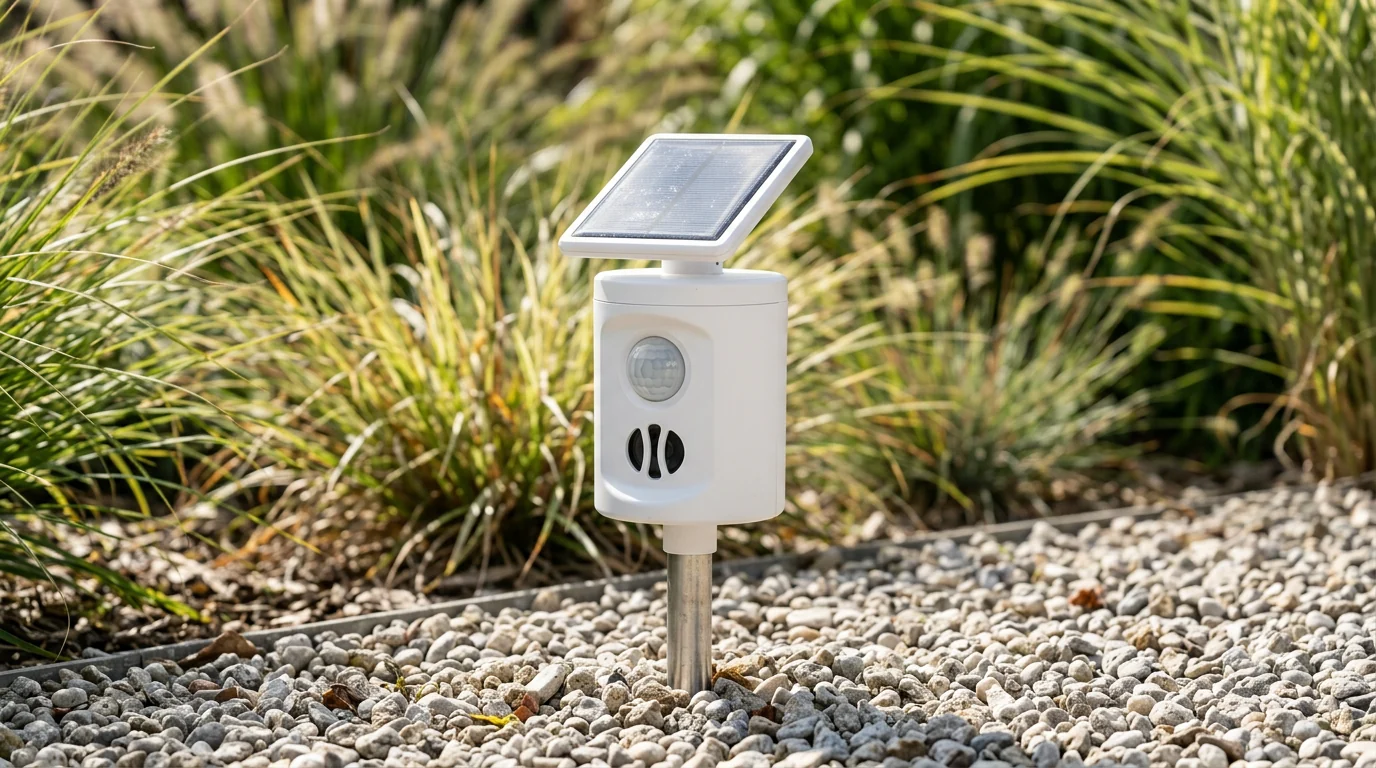
Solar-charged waterproof stake with SmartLink pairing so several units fire together and cats cannot dodge a single point.
Check Price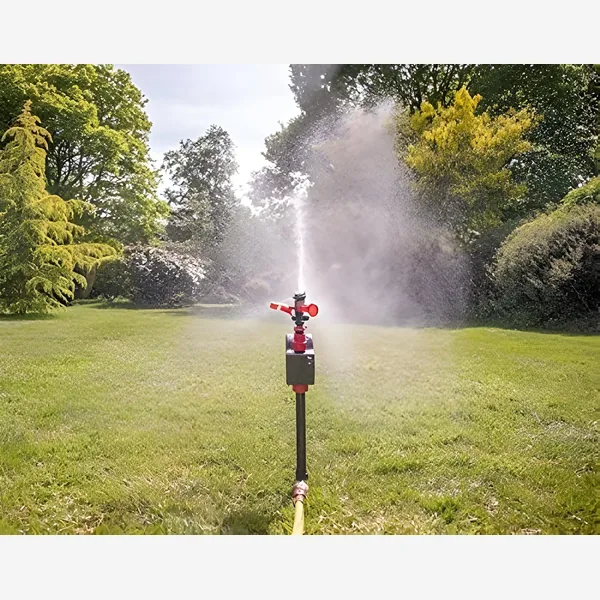
Jet Spray Motion Repeller (hose)
Hose-fed motion sprayer that fires a harmless five-second burst when wildlife crosses the sensor arc—highly visible deterrence.
Check Price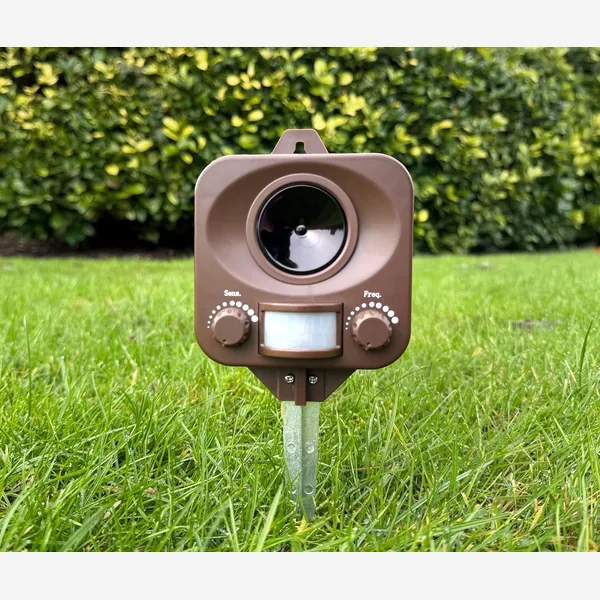
Battery Fox Repellent (waterproof)
Ground-stake fox scarer with motion-triggered ultrasonic output tuned for larger mammals visiting lawns after dark.
Check Price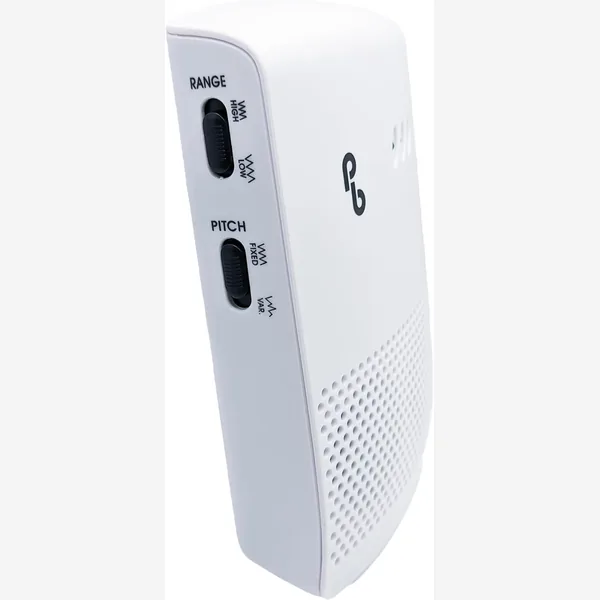
Advanced Whole-House Rat & Mouse Repeller
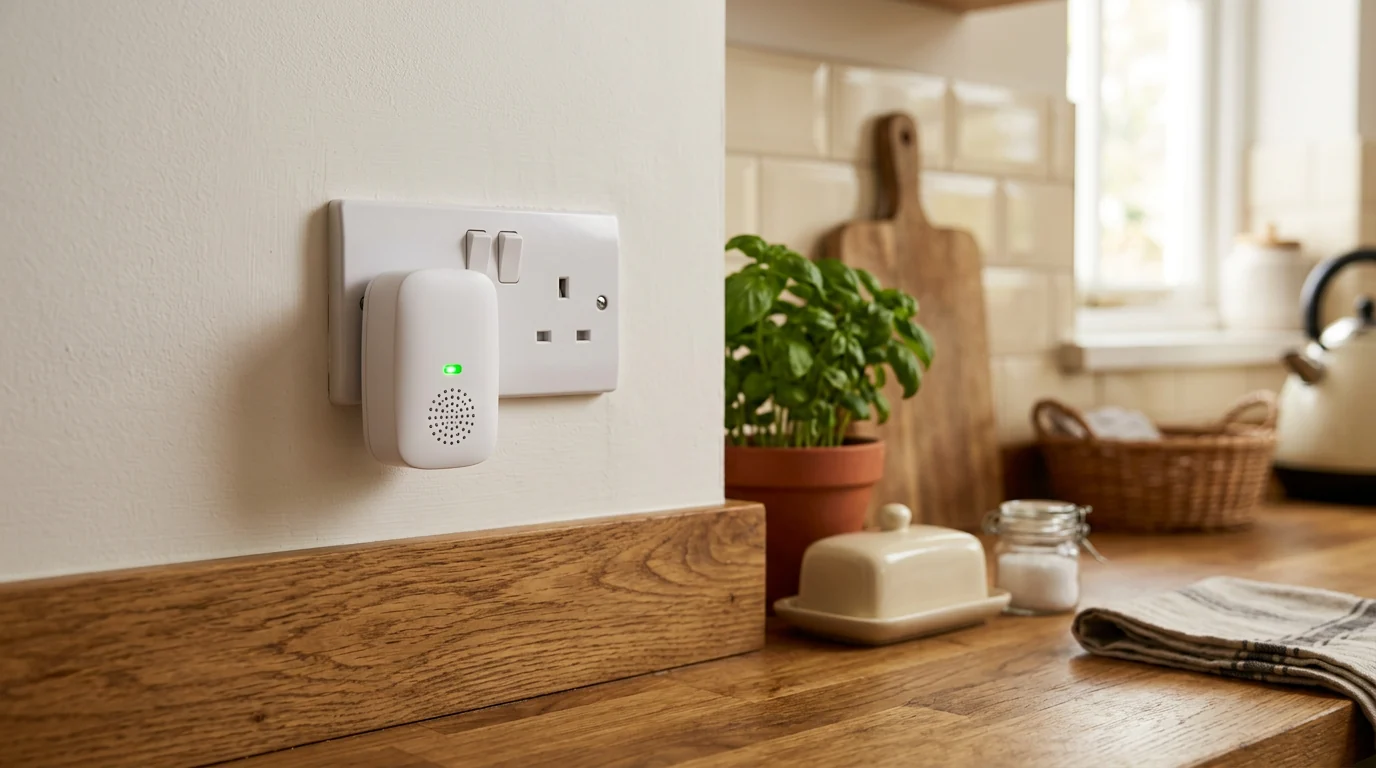
Plug-in ultrasonic and electromagnetic repeller designed to disturb rodents along ordinary household wiring runs indoors.
Check PriceWhy cats keep coming back to your garden
Cats are creatures of routine. Once a particular patch of lawn, flower bed or vegetable border becomes part of a cat's mental map, it will return to it almost every day, often at the same times. They are using your garden for three things: territory marking, toileting and hunting. The first of those is the most stubborn because the scent of urine encourages the same cat and its rivals to return repeatedly, layer after layer, which is why the problem tends to get worse before it gets better if you do nothing.
That's the problem the PestBye Battery Operated Cat Repeller V2 was built to solve. Instead of chasing cats away with a sudden flap of a towel or a shout from an open window, the repeller interrupts the visit silently, from a fixed point, every single time. The cat does not know where the noise is coming from. It just knows that this particular corner of the garden is now unpleasant, and its instinct is to avoid returning.
How the PIR sensor and ultrasonic burst work
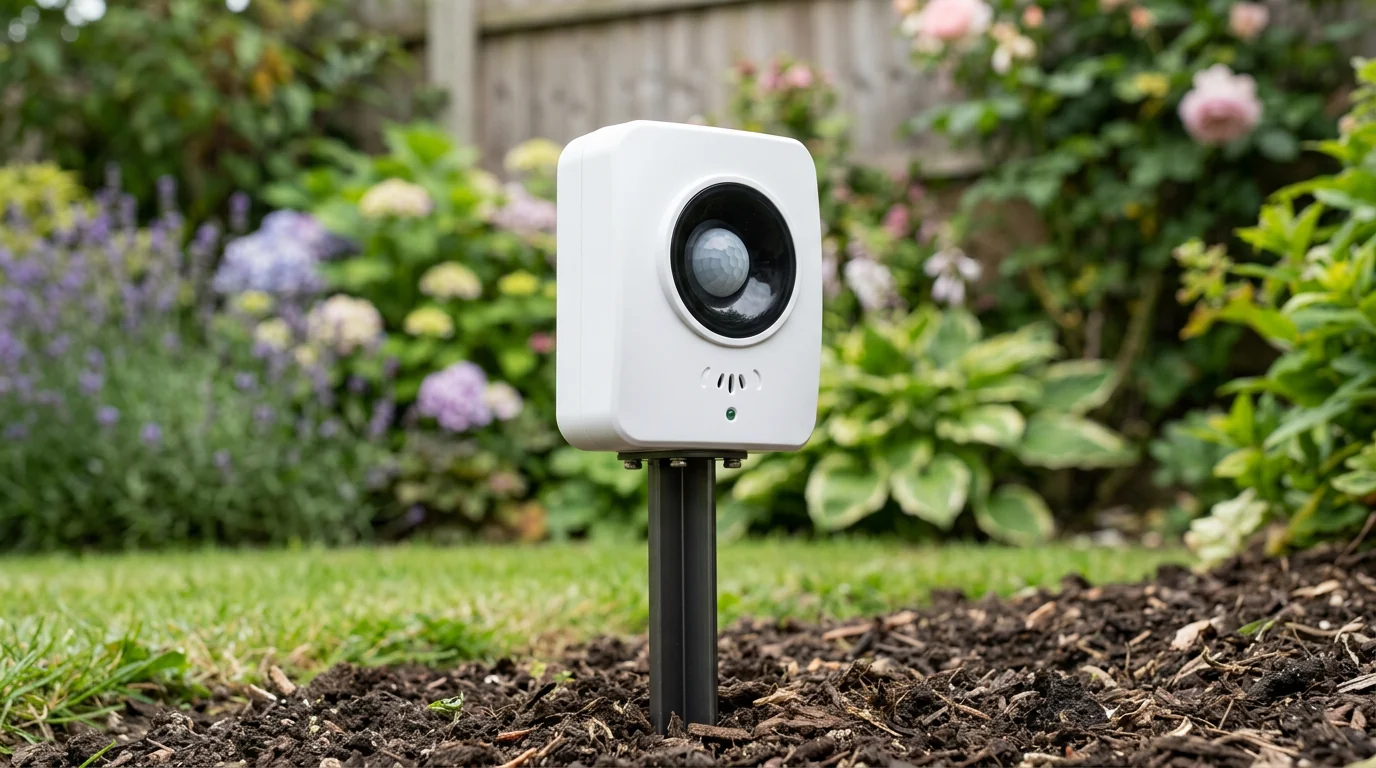
The unit contains two key components: a Passive Infra-Red (PIR) motion sensor and a high-frequency piezo speaker. The PIR reads the thermal silhouette of a warm body moving against a cooler background. When it picks up a moving shape at roughly the size and heat signature of a cat, fox or similar small mammal, it fires a short burst of sound in the 18–24 kHz range. Adult humans rarely hear these frequencies, but they sit squarely inside the sensitive upper register of a cat's hearing.
Crucially, the V2 uses what we call HyperResonance Frequency: instead of emitting the same pitch every time, the sound jumps between frequency levels each time it triggers. That variation is why a cat cannot "get used to" the repeller. If the sound was always identical, an individual cat might eventually learn to tolerate it. With HRF, every encounter feels fresh and unwanted.
Detection range, angle and coverage
The PIR has a detection range of up to 12 metres and a horizontal arc of about 110°. In practice, that is enough to cover a typical British back garden from a single corner, or to cover one problem flower bed extremely reliably if you mount the unit closer in. If you have an L-shaped garden, or a wide 20-metre lawn, a second unit pointing from the opposite side usually gives complete coverage. Many customers find that the combination of our battery unit plus a single solar repeller on the far fence line is enough for gardens up to 150 m².
Siting the repeller: the rules that matter
Most complaints we receive about "not working" units come down to placement. Four quick rules solve almost every problem:
- Point the sensor at the entry point. Cats don't fall out of the sky – they use known routes. Aim the unit at the top of a fence, a gap under a gate or a specific flower bed.
- Mount 20–30 cm off the ground. Too low and the PIR gets confused by grass movement; too high and it mostly watches empty air above the cat.
- Avoid pointing it at heat sources. Brick walls retain warmth and can produce false triggers, as can the exhaust from a tumble-dryer vent.
- Keep the face dry. The unit is rated for outdoor use, but direct rain on the sensor lens will blur what it "sees". A small overhang is ideal in very exposed spots.
How long does it take to work?
In roughly seven out of ten gardens, visits drop noticeably in the first week and the habit is broken by week three. In more stubborn cases – usually where multiple cats share the territory or a dominant tom has been using the garden to mark for months – we recommend giving it a full month, and adjusting the aim after a week to catch any side approaches you didn't spot originally. It also pays to clean existing scent marks with an enzyme-based cleaner during that first week; this removes the "welcome home" signal that keeps drawing them back.
Is it humane?
Yes. The unit never makes physical contact with an animal and cannot cause lasting distress. The noise is uncomfortable in the way that a high-pitched feedback whine is uncomfortable to you – the cat's instinct is to simply move away. Within a few encounters, the animal learns that this particular garden is a "bad cafe" and removes it from its daily round. There are no poisons, traps, glue boards, nets or chemicals involved at any point. For that reason, all the major UK humane-gardening organisations and most cat welfare charities are comfortable with motion-triggered ultrasonic deterrents.
Batteries, weatherproofing and longevity
The V2 runs on 4 × AA batteries. Under normal garden traffic, a fresh set of quality alkalines lasts roughly four to six months. We strongly recommend rechargeable NiMH batteries for anyone who wants to run the unit year-round: they cope better with cold snaps and they are obviously much kinder on the planet. The casing is rated to IPX4 – splashing rain, frost and light snow are not a problem. If you want a truly "fit and forget" unit, our Solar Cat Repeller is the zero-maintenance option for the main entry point, with the battery V2 covering the opposite angle.
What other animals does it deter?
Although the V2 is tuned for cats, the same unit – at a different frequency setting – is genuinely effective against urban foxes, grey squirrels stealing from bird feeders, and martens or mink in rural properties. It will not harm hedgehogs, which move slowly and generally fall below the PIR's trigger threshold at night, and it has no measurable effect on garden birds or pollinators. If foxes are your main problem, however, our dedicated fox deterrent page covers the best settings.
Summary
The PestBye Ultrasonic Cat Repeller V2 is the right choice if you want a humane, affordable, maintenance-light solution that tackles the one or two specific spots in your garden where cats keep appearing. Pair it with sensible placement and a week of patience, and a long-standing cat problem usually becomes last year's story.

Set it up once. Enjoy your garden again.
Pair the right deterrent with the right sensor placement and British gardeners consistently see a calmer, tidier garden within a fortnight.