
Humane Fox Deterrent
Urban foxes are clever, stubborn and creatures of deep habit. Ordinary cat repellers sometimes work on them and sometimes don't. The PestBye fox deterrent is tuned specifically for their hearing profile and their nocturnal routine, and it works.
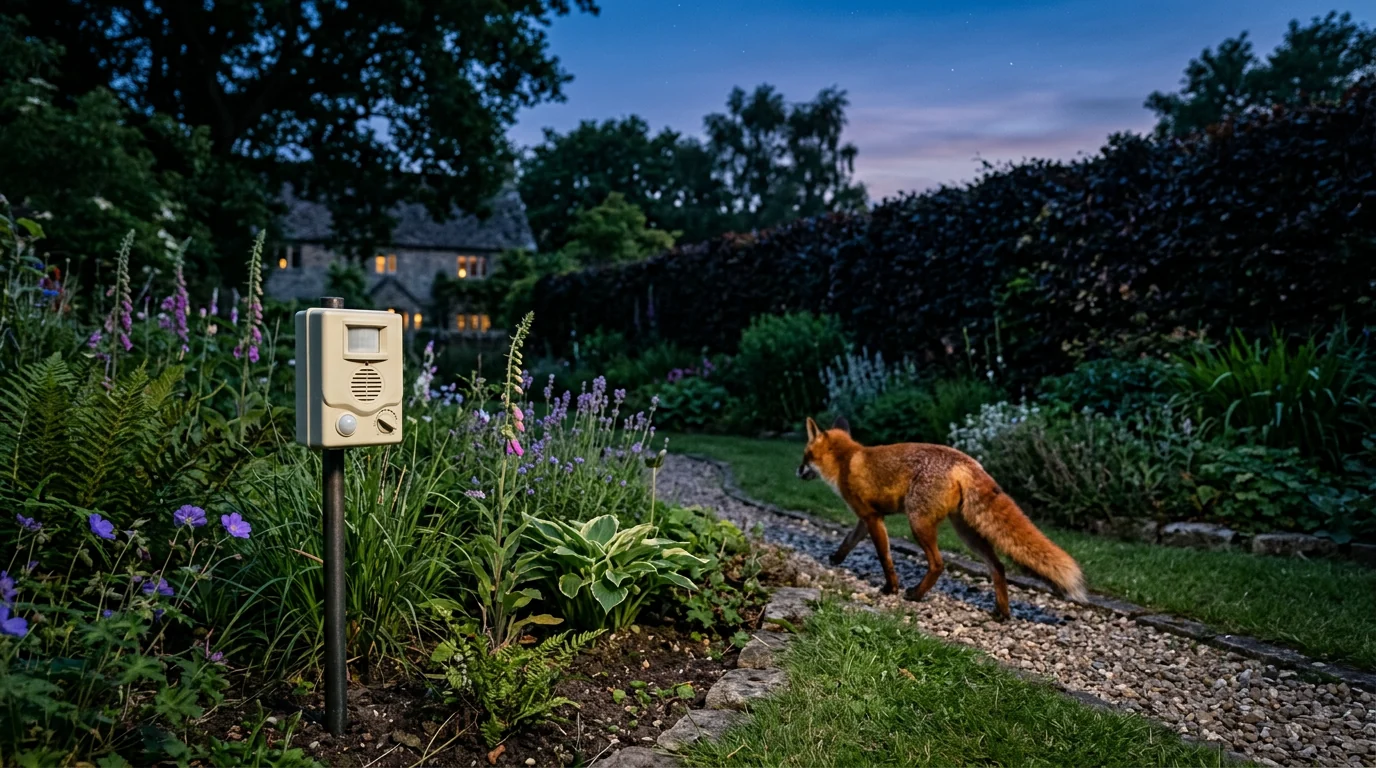
Cat stakes, jet spray and shed repellers
Fox customers often add ultrasonic cat coverage, visible water bursts or a shed-rated sonic rodent unit alongside the fox stake.
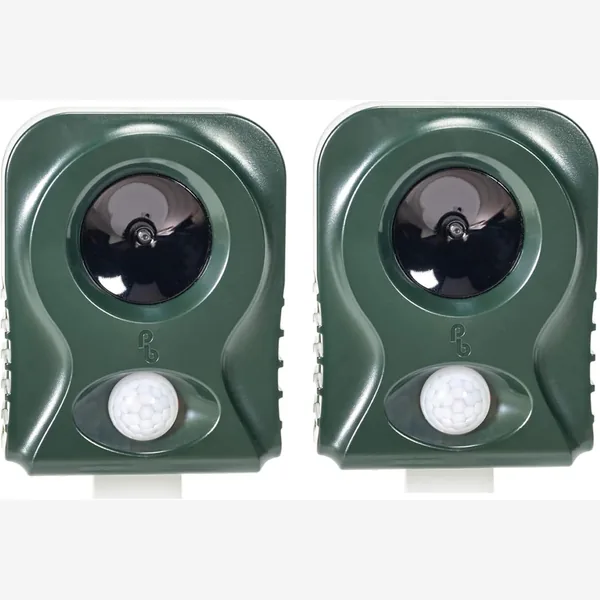
Battery Operated Cat Repeller V2 (Twin Pack)
Twin-pack ultrasonic stakes with HyperResonance sweeping and PIR detection—ideal when neighbourhood cats will not leave beds or lawns alone.
Check Price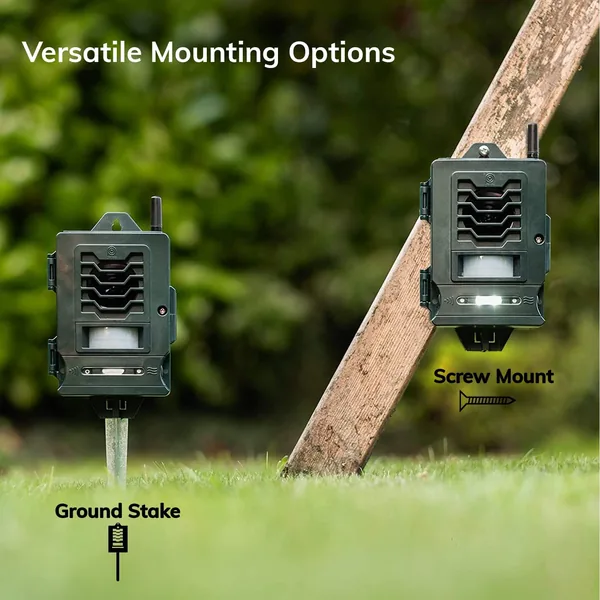
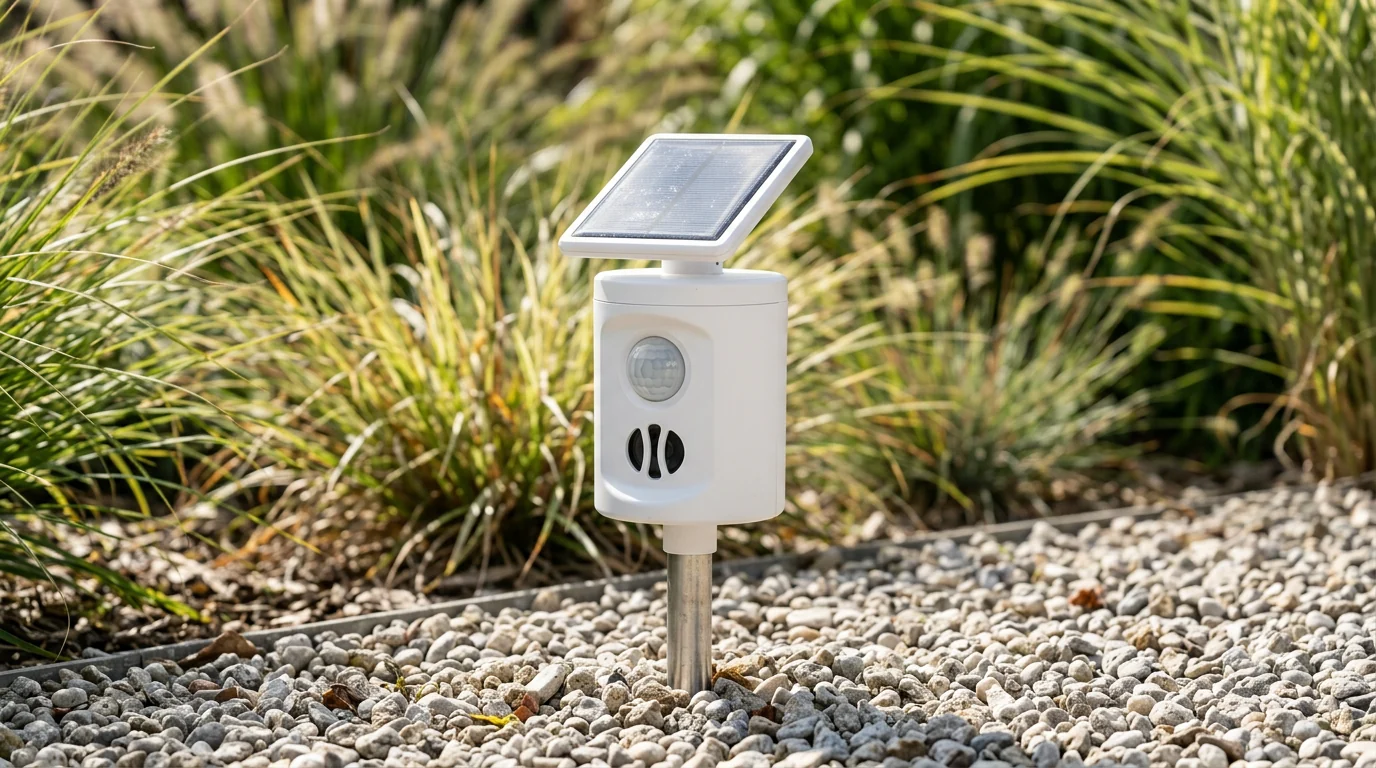
Ultrasonic Smart Link Solar Cat Repellent
Solar-charged waterproof stake with SmartLink pairing so several units fire together and cats cannot dodge a single point.
Check Price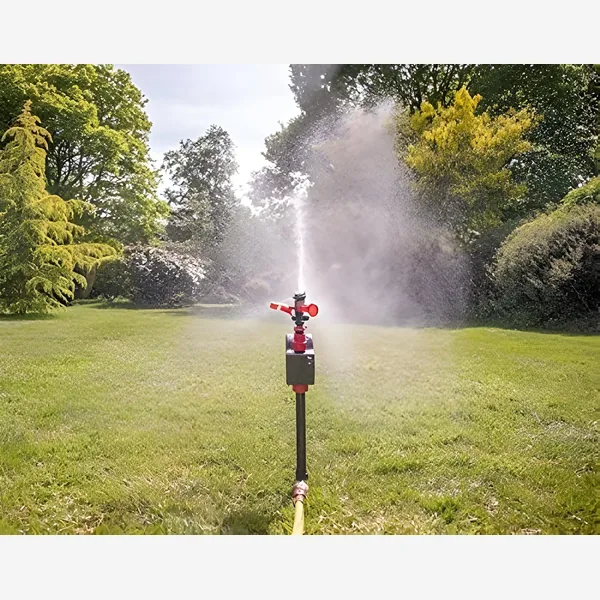
Jet Spray Motion Repeller (hose)
Hose-fed motion sprayer that fires a harmless five-second burst when wildlife crosses the sensor arc—highly visible deterrence.
Check Price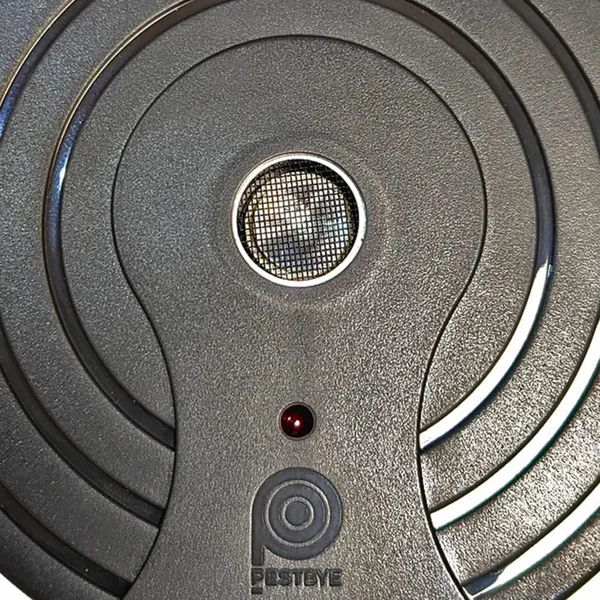
Long-Life Battery Rat & Mouse Repeller
Battery sonic repeller for sheds, garages and outbuildings—useful when rodents and foxes both target the same outbuilding corners.
Check PriceThe British fox problem
The British urban fox is a remarkable animal. The latest estimates put around 150,000 foxes in towns and cities in the UK, with core populations in London, Bristol, Manchester and Edinburgh. They are generally not dangerous, and they do a lot of quiet good by keeping rat numbers down, but the damage they do to flower beds, lawns, children's toys, compost bins, chicken coops and ponds is considerable. The sharp, musky scent of fox urine on decking or a door mat is its own problem.
Unlike cats, foxes do not come and go lightly. A fox learns a route through a group of back gardens and uses it, every single night, unless something actively changes the map. That's why the deterrent has to fire every time, not sometimes, and it is why a half-hearted approach tends to fail.
Why the PestBye fox deterrent works
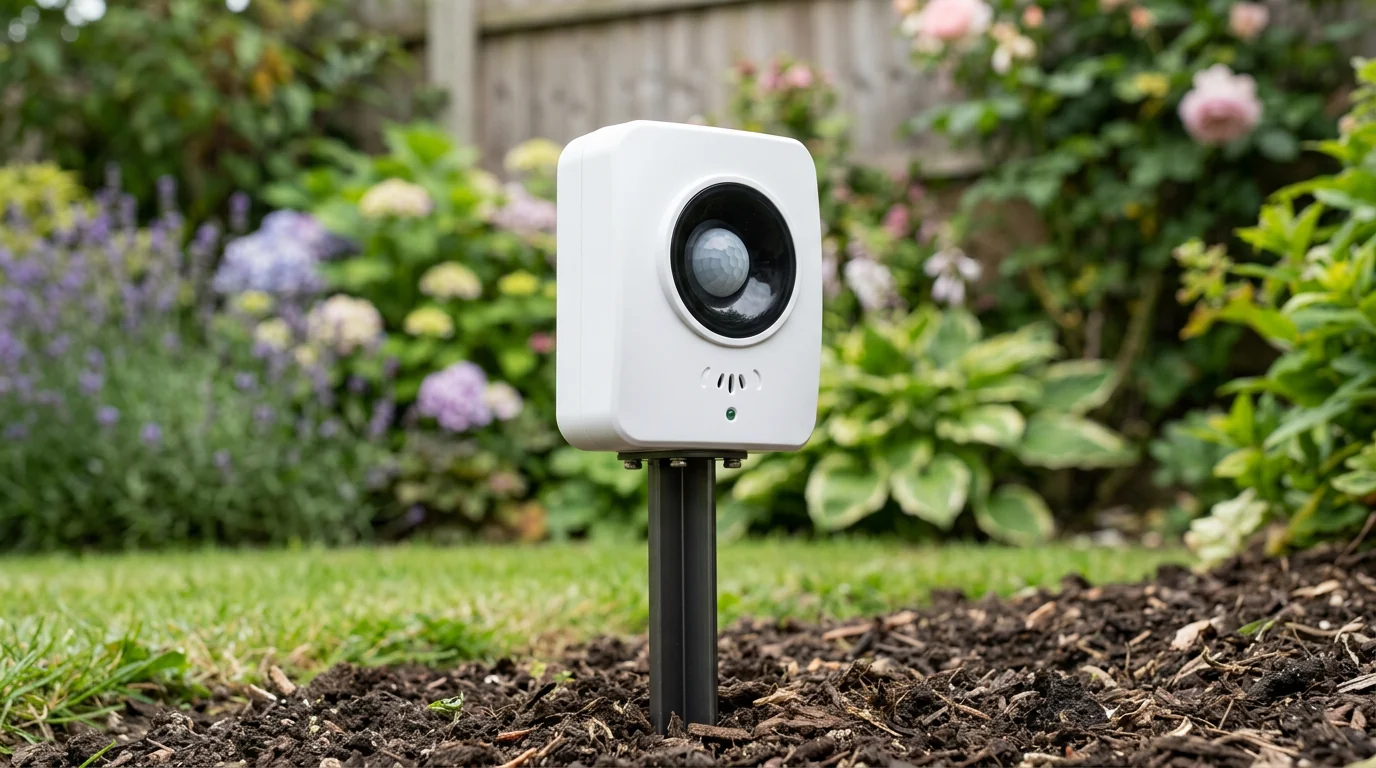
Our fox-tuned deterrent shares the same platform as the cat repeller V2, but with three crucial differences:
- Lower-frequency band. Foxes have particularly sensitive hearing in the 15–20 kHz range. The fox preset targets that band directly.
- Longer burst duration. Unlike cats, foxes don't simply turn on their heels – they pause. A longer burst keeps the unpleasantness going until they commit to moving on.
- Dusk-to-dawn mode. A small light sensor means the unit only fires at night, when foxes are active, which dramatically extends battery life and avoids nuisance triggers during busy family days in the garden.
This combination is the reason customers with long-running fox problems – the kind that have survived ordinary cat repellers, chilli flakes, male urine, spikes and mothballs – tell us the PestBye fox setting finally resolved it.
The fox behaviour we're interrupting
Foxes in British gardens do four damaging things, and each needs a slightly different placement:
- Scent marking, usually on door mats, decking corners, children's toys and garden statues. Aim the deterrent at these.
- Digging and cacheing food under lawns. The unit should be angled to cover the lawn itself.
- Raiding compost bins or bin stores. Mount close, pointing at the bin.
- Predation on chickens, ducks or rabbits. This is the most urgent scenario and may justify two units covering opposite entry points.
Recommended setup
A typical effective fox setup looks like this:
- Identify the entry point. For 90% of gardens it is either a gap under or beside a gate, a low spot in a fence, or a shared boundary with a neighbour's garden that has dense cover.
- Mount the unit about 40 cm off the ground, pointing at that entry point.
- Set it to the fox preset in the frequency settings and enable night mode.
- Remove food sources for at least two weeks: bins secured, bird food brought indoors at night, fallen fruit cleared.
- Give it a month. Fox habits are sticky; persistence is essential.
In combination with our Jet Spray on a second route, the success rate across our customer base exceeds 90% within six weeks.
Is it humane and legal?
Yes on both counts. Foxes are protected under the Wildlife and Countryside Act 1981 against certain lethal controls, and poisoning or trapping them without appropriate licences is illegal in the UK. Motion-activated ultrasonic and water-based deterrents are explicitly permitted; they change fox behaviour through mild discomfort rather than harm. The RSPCA publishes guidance recommending exactly this kind of non-lethal approach.
Things that don't work – and why we don't sell them
Over the years, we have tested almost every domestic fox "remedy" on the market. Several do not work well enough to justify selling:
- Sonic repellents without PIR triggers. Foxes habituate within days to constant sound. Motion-triggered bursts are very different.
- Chemical scent repellents. These need to be reapplied after every rainfall, and foxes often over-mark them rather than leave.
- Decoy predators. Foxes are extremely smart and learn static shapes quickly.
- Ultrasonic cat-only presets. Too high a frequency for the most territorial foxes; that's why our fox preset exists.
Weatherproofing and maintenance
Like all our garden units, the fox deterrent is rated IPX4 – fine for everyday British weather. In winter, wipe the PIR lens clear of frost or snow every few days for best performance. Batteries last four to six months in night-mode thanks to the dusk-to-dawn sensor, and a fresh set in spring will see you comfortably through peak cub season.
Summary
Urban foxes can be a miserable guest in a British garden, but they respond reliably to a well-placed, fox-tuned deterrent and a few weeks of patience. The PestBye fox deterrent – ideally paired with the Jet Spray – has reclaimed lawns, coops, ponds, bin stores and door mats for tens of thousands of gardeners. Consistent triggering plus careful removal of attractants is the formula that works.

Set it up once. Enjoy your garden again.
Pair the right deterrent with the right sensor placement and British gardeners consistently see a calmer, tidier garden within a fortnight.