
Rat and Mouse Repeller
A simple, humane alternative to traps, glue boards and poison. The PestBye whole-house repeller uses ultrasonic and electromagnetic pulses to make rats and mice want to leave – and stay away.
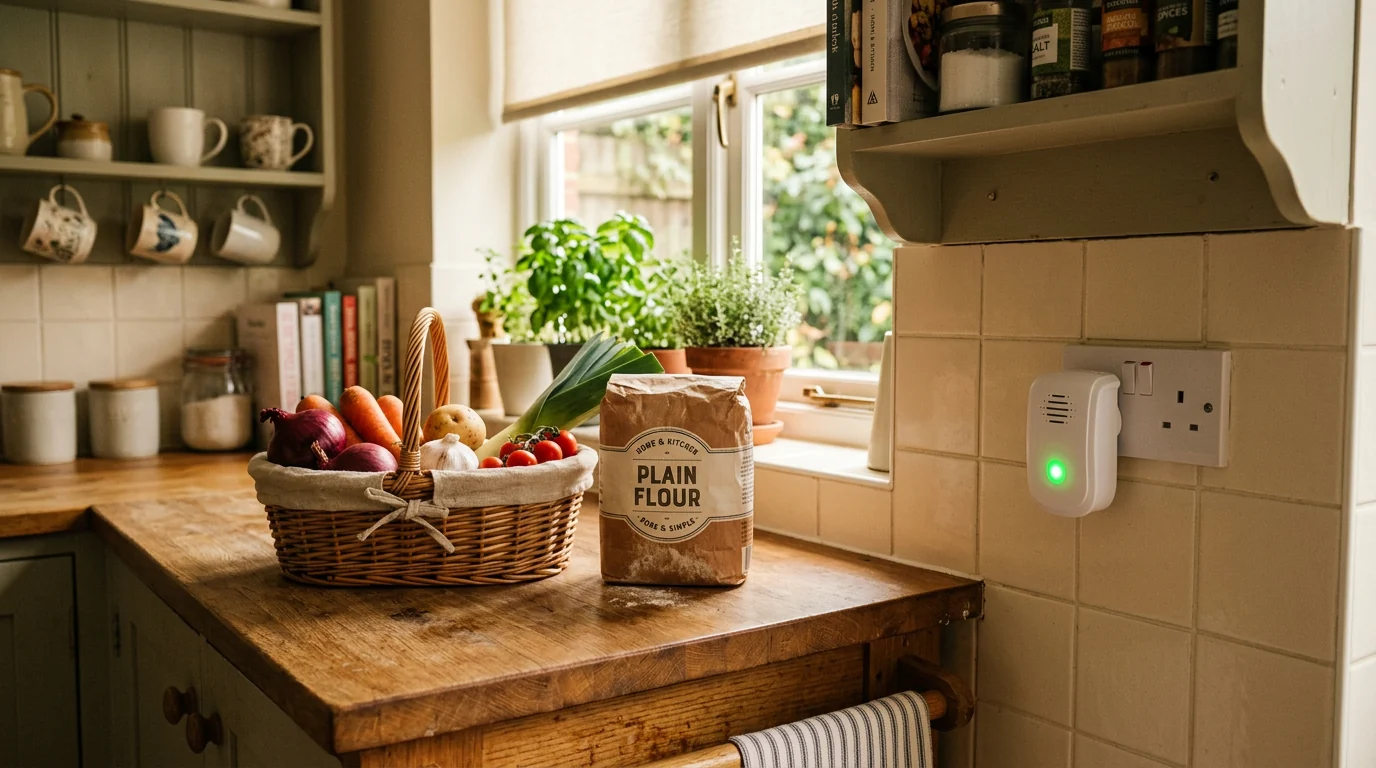
Garden stakes and spray you can run alongside
While the plug-in clears indoor runs, many households still defend patios and lawns with these outdoor PestBye lines.
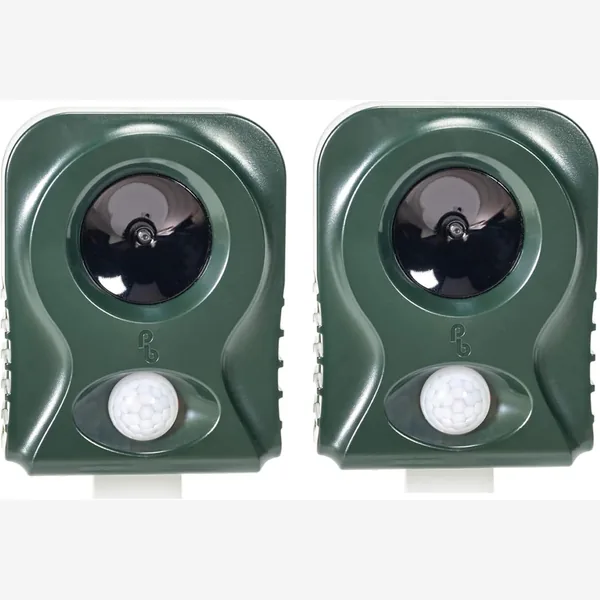
Battery Operated Cat Repeller V2 (Twin Pack)
Twin-pack ultrasonic stakes with HyperResonance sweeping and PIR detection—ideal when neighbourhood cats will not leave beds or lawns alone.
Check Price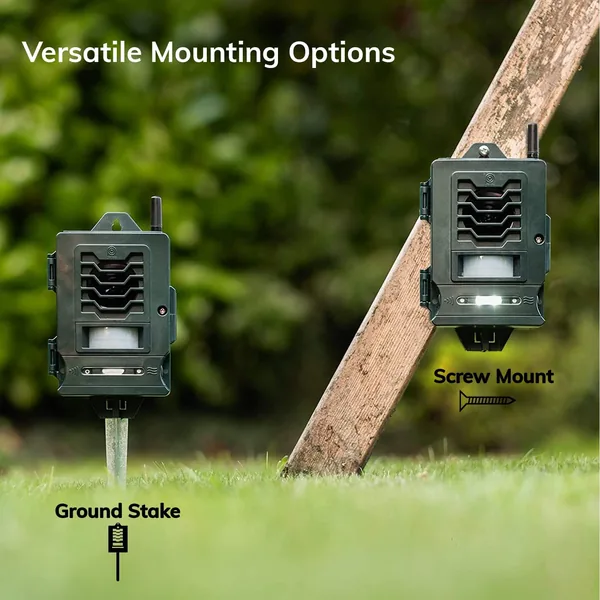
Ultrasonic Smart Link Solar Cat Repellent
Solar-charged waterproof stake with SmartLink pairing so several units fire together and cats cannot dodge a single point.
Check Price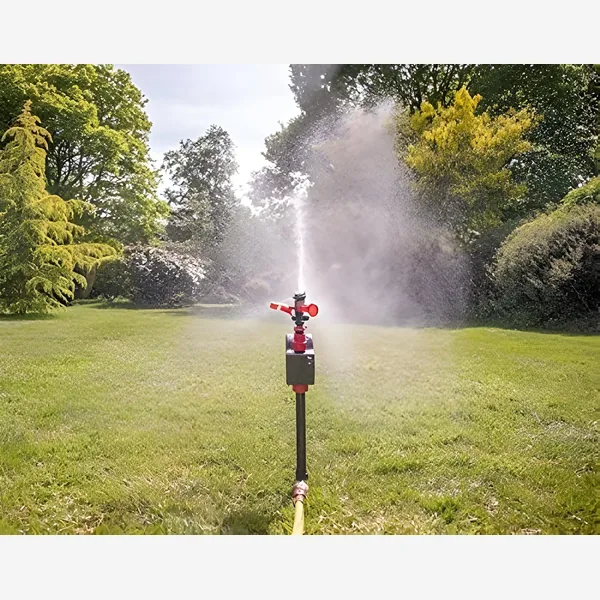
Jet Spray Motion Repeller (hose)
Hose-fed motion sprayer that fires a harmless five-second burst when wildlife crosses the sensor arc—highly visible deterrence.
Check Price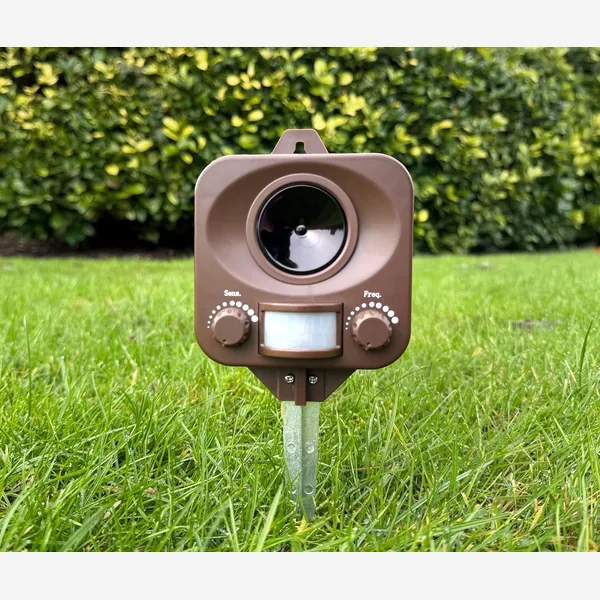
Battery Fox Repellent (waterproof)
Ground-stake fox scarer with motion-triggered ultrasonic output tuned for larger mammals visiting lawns after dark.
Check PriceWhat's in your walls?
In the UK, the two rodents that share our homes are the house mouse (Mus musculus) and the brown rat (Rattus norvegicus). Both live almost entirely hidden. You usually hear them – scratching in the ceiling, a rustle behind the cooker, the faint "tick" of feet on an empty loft floor – long before you see them. By the time you catch a glimpse, a breeding population is usually already established in the cavity walls or floor voids.
Traditional responses to this are harsh: glue boards, snap traps and rodenticide. They work, but they also cause slow, visible suffering. Secondary poisoning of owls, foxes and pets is a very real and documented problem with anticoagulant rodenticides. That's why the PestBye Advanced Whole House Repeller exists – to send rodents elsewhere without killing them.
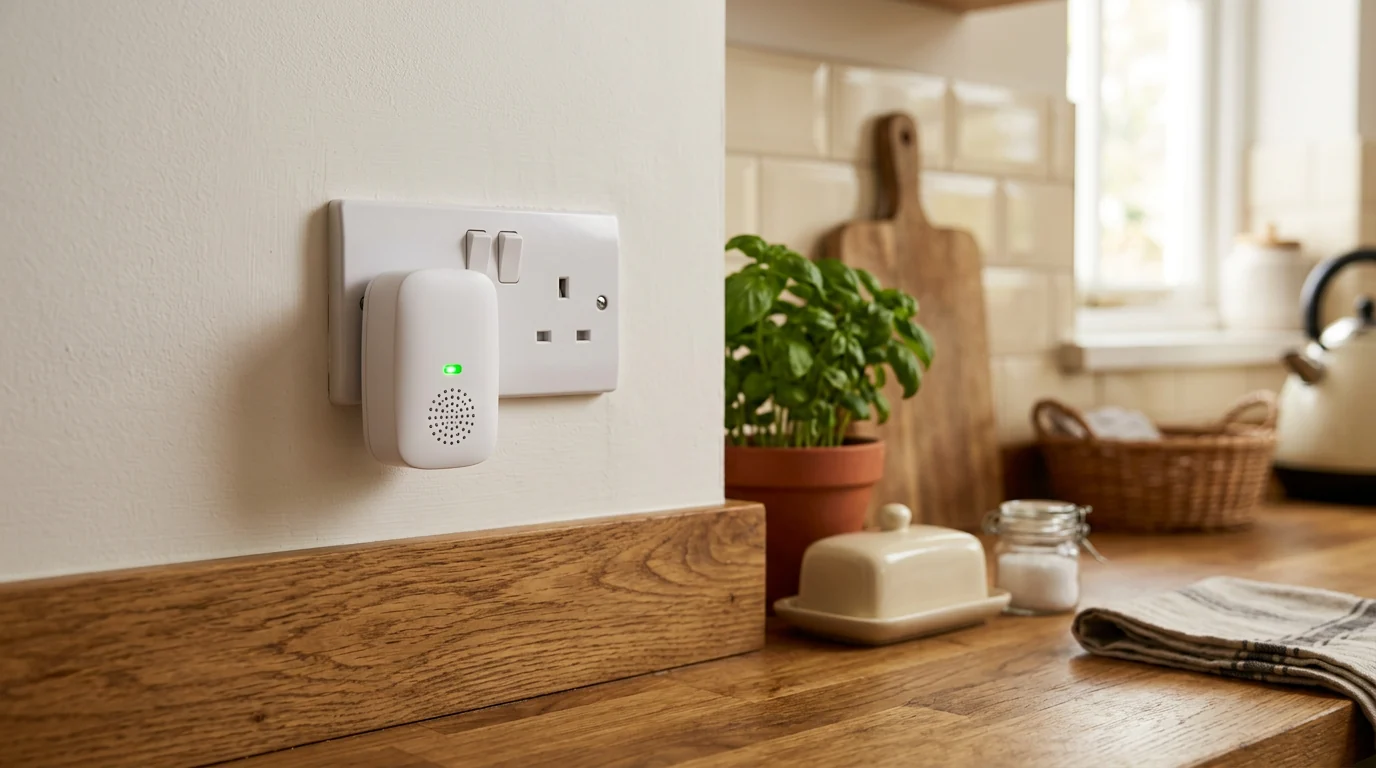
How the whole-house repeller works
The unit combines two complementary technologies:
- Ultrasonic waves (in the 30–50 kHz range) emitted into the room through a small speaker. Rodents hear this clearly; we don't.
- Electromagnetic pulses sent through the ring main of your property, reaching behind skirting boards, under floors and inside cavity walls – the exact spaces rodents prefer to use.
The effect on the rodents is not pain; it is a pervasive feeling of "this space is no longer safe or calm", a bit like a human trying to concentrate next to road drilling. Their natural response is to leave and find somewhere else to nest. Mice typically move on within a fortnight; rats are more stubborn and usually take three to four weeks.
Where to plug it in
The plug-in repeller works best when you follow three simple rules:
- Plug it into a socket that is at least 30 cm above the floor. Low sockets behind furniture effectively muffle the ultrasonic output.
- Use one unit per floor. The ultrasonic element doesn't pass well through solid walls, although the electromagnetic pulses through the ring main do help cover inaccessible gaps.
- Don't block the speaker. Keep the area immediately around the unit clear of curtains, boxes and cushions.
The first two weeks
There is one important thing to be aware of. In the first few days after you install the repeller, rodents may actually become more active in your home, not less. This is normal. It is the "flushing" period, in which the mice or rats are disturbed from their normal routine and move around looking for calmer locations. If you hear more scratching or see more droppings in a new place during week one, that is usually the sign it is working, not failing.
By the end of week three in a typical mouse infestation, activity drops sharply. Brown rats, which build larger networks and cache more food, often take longer – a month is a reasonable expectation in a rural property where they can return from neighbouring outbuildings.
Combining with proofing
The repeller works a great deal better when combined with some simple proofing work. No deterrent in the world can compete with a constant food supply or a gap under the kitchen door. In parallel with plugging in the unit, we recommend:
- Blocking any gap wider than a pencil with steel wool and silicone or metal plate.
- Bringing pet food, bird food and flour into sealed containers.
- Emptying kitchen bins nightly.
- Cutting back shrubs and climbers that touch external walls.
These four steps, paired with the repeller, typically resolve an infestation within a month without a single trap or bait station.
Is it safe for pet dogs, cats and rabbits?
Yes. The frequency and intensity levels we use have been tested for pet safety and are below the threshold that causes dogs and cats discomfort. We nonetheless recommend a simple precaution: for the first day, observe your pet. If a dog or cat reacts to the new unit (for example, pawing at the socket), move the unit to a different room for a while. The vast majority of owners see no reaction at all. Pet rats, hamsters, gerbils and mice should be kept well away from the unit – the whole point is to make them uncomfortable.
Coverage
A single unit covers an open-plan area of roughly 200 m². For terraced houses and most 1930s semis, one unit per floor is sufficient. For bungalows with large open lofts, place one in the living area and one in the loft via a power extension. For sheds, garages and outbuildings, a single unit per outbuilding is recommended because masonry walls attenuate the ultrasonic range considerably.
How does it compare to traps and poison?
Traps and poisons are reactive – they kill animals that have already entered the house. The repeller is preventive – it encourages rodents to route around your property in the first place. That is why, once the initial problem is resolved, we recommend leaving the unit running all year round. It is low-power (around 3 W), cheap to run, and provides continuous background protection at roughly 30p a month in electricity.
Summary
For most UK households, a single PestBye whole-house repeller plus a weekend of basic proofing is enough to clear a rat or mouse problem without causing distress to any animal. Leave it plugged in afterwards and you dramatically reduce the chance of a return visit. For outdoor rodent issues around bin stores and sheds, combine the indoor unit with a garden-rated ultrasonic stake outside.
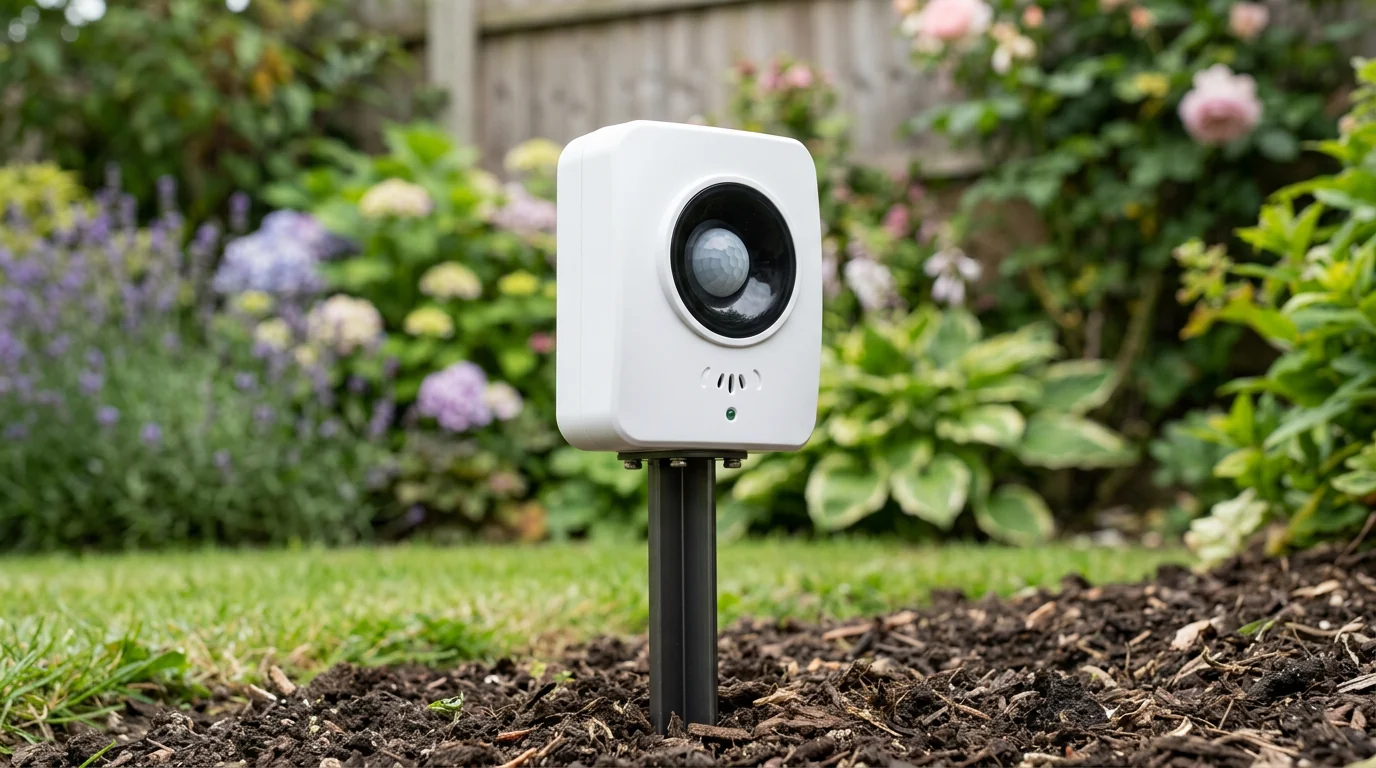
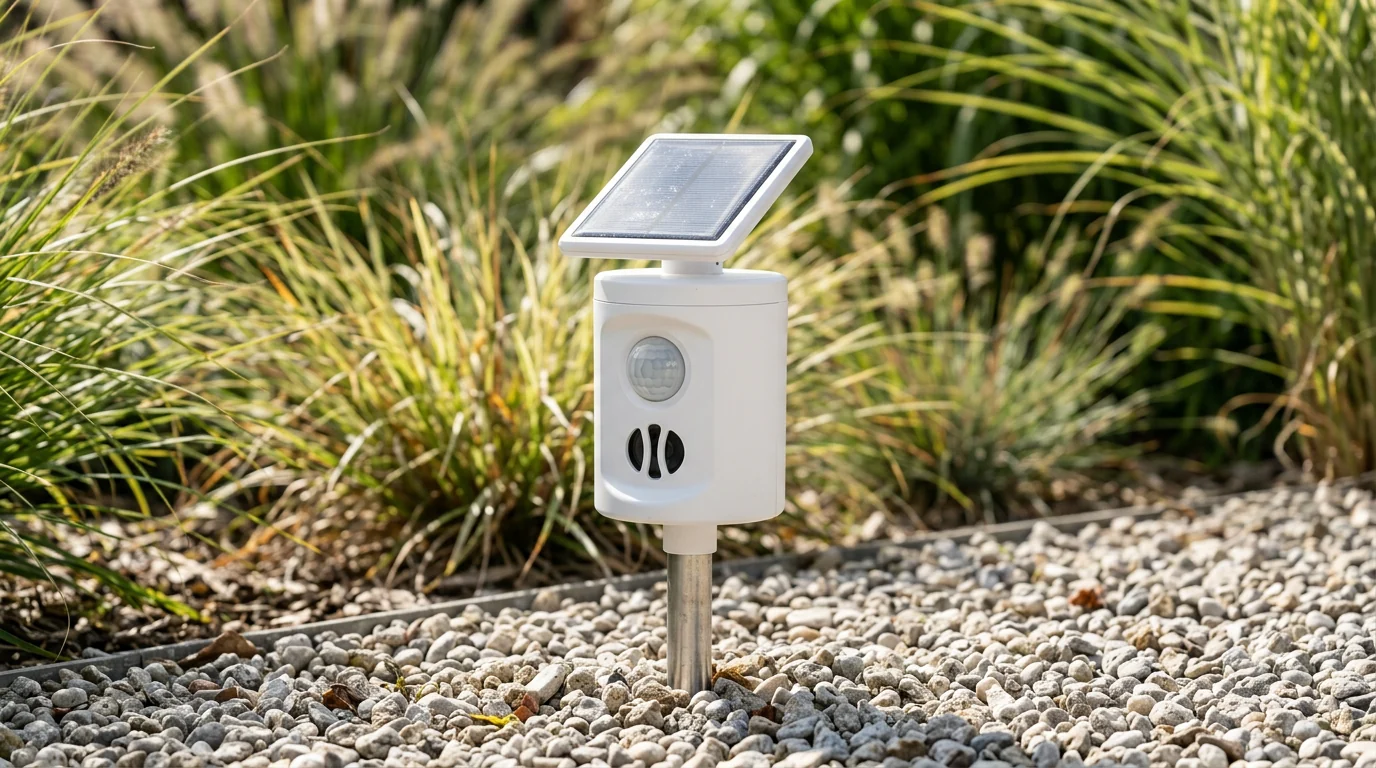

Set it up once. Enjoy your garden again.
Pair the right deterrent with the right sensor placement and British gardeners consistently see a calmer, tidier garden within a fortnight.