
Solar Powered Cat Repeller
Set it up once, in the spring or summer, and the PestBye solar cat repeller will quietly work away on its own for years. No batteries to change. No wires to hide. Just a discreet stake tucked into your border doing its job.

Battery, spray and indoor alternatives
Solar pairs well with these PestBye lines when you need backup coverage or a different technology.
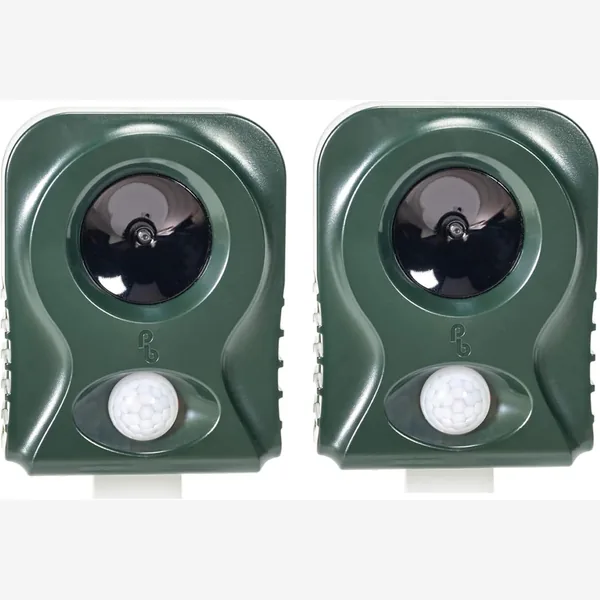
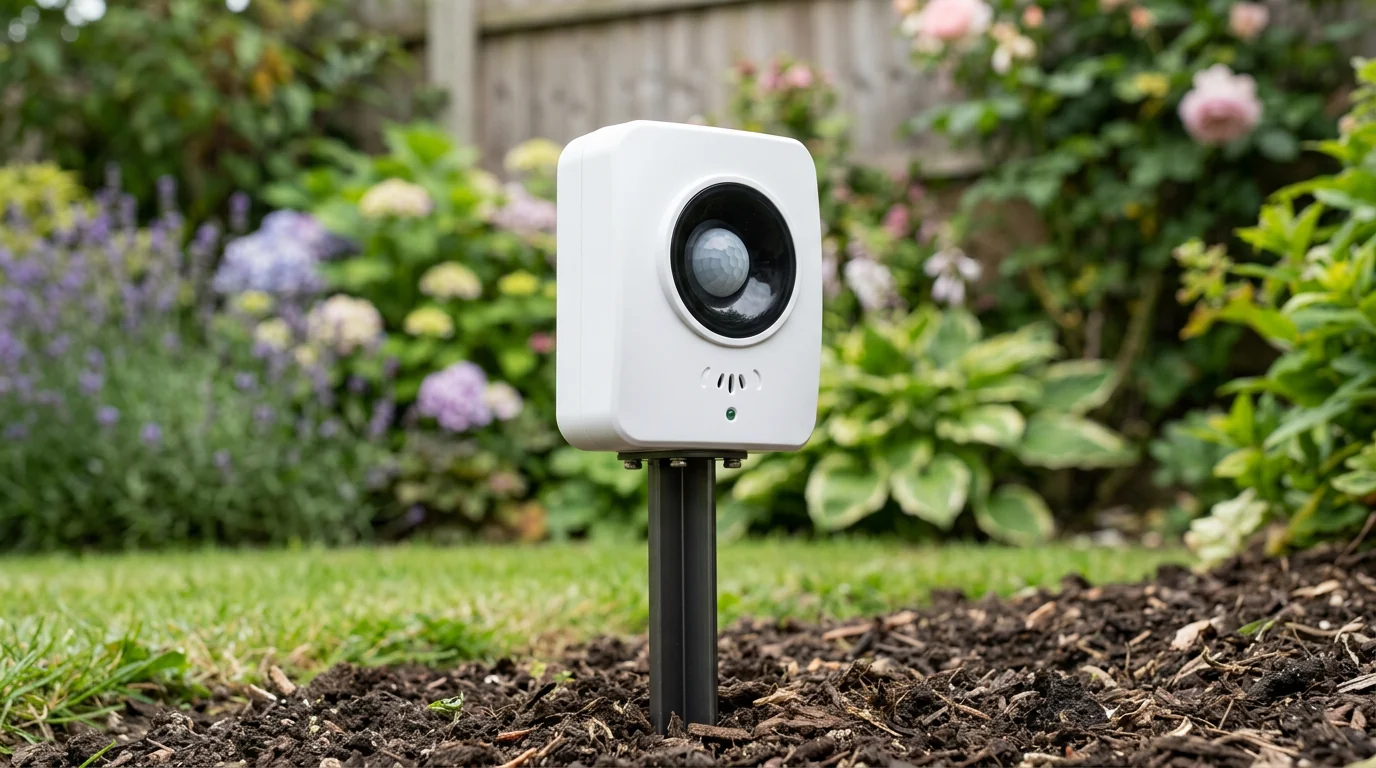
Battery Operated Cat Repeller V2 (Twin Pack)
Twin-pack ultrasonic stakes with HyperResonance sweeping and PIR detection—ideal when neighbourhood cats will not leave beds or lawns alone.
Check Price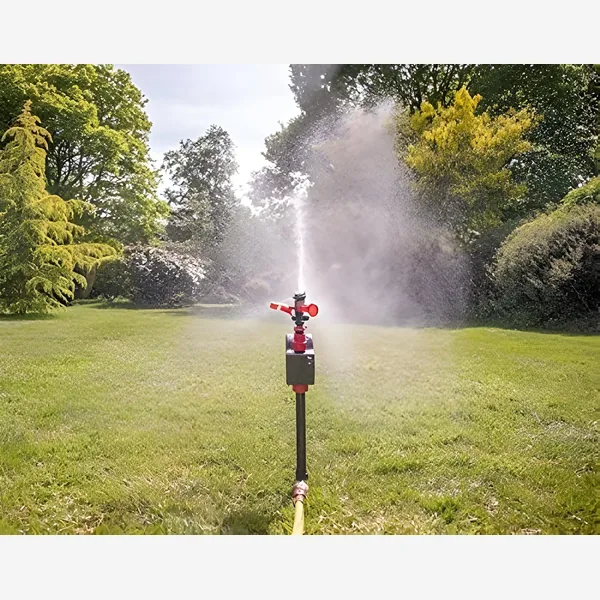
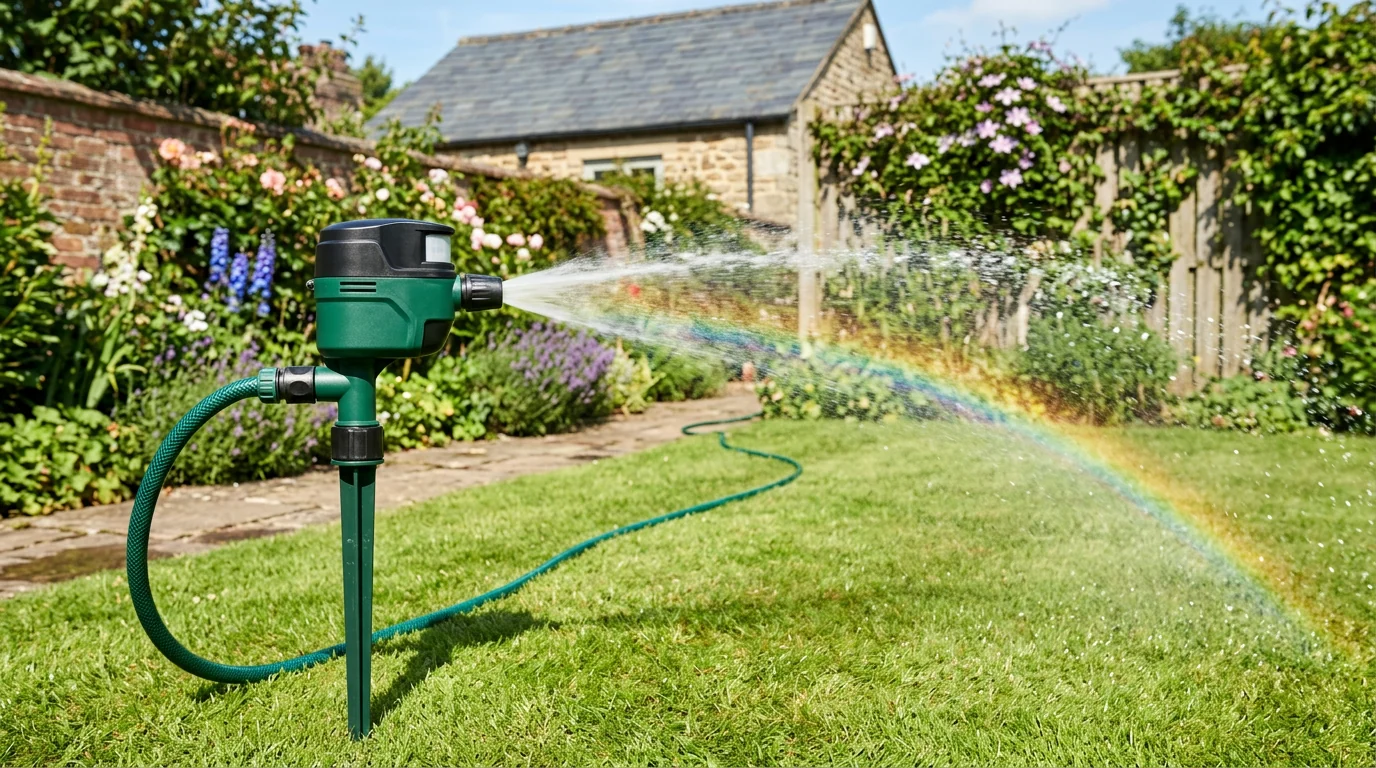
Jet Spray Motion Repeller (hose)
Hose-fed motion sprayer that fires a harmless five-second burst when wildlife crosses the sensor arc—highly visible deterrence.
Check Price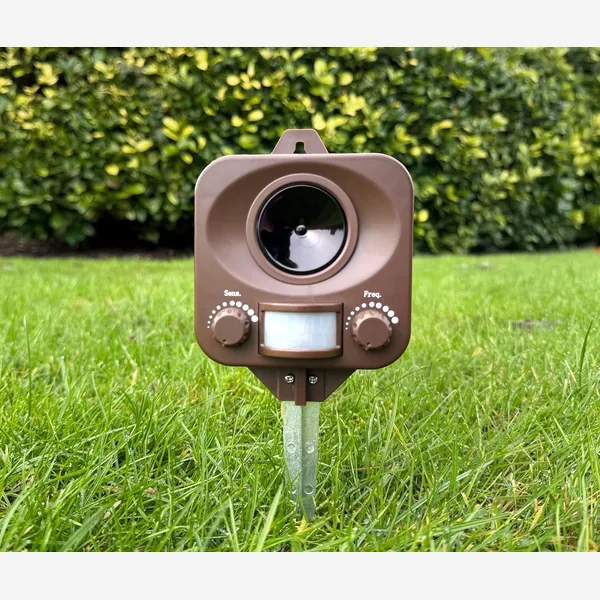
Battery Fox Repellent (waterproof)
Ground-stake fox scarer with motion-triggered ultrasonic output tuned for larger mammals visiting lawns after dark.
Check Price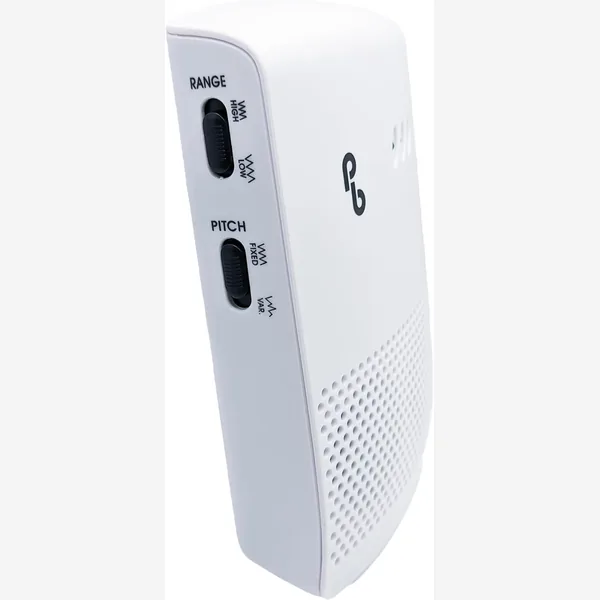
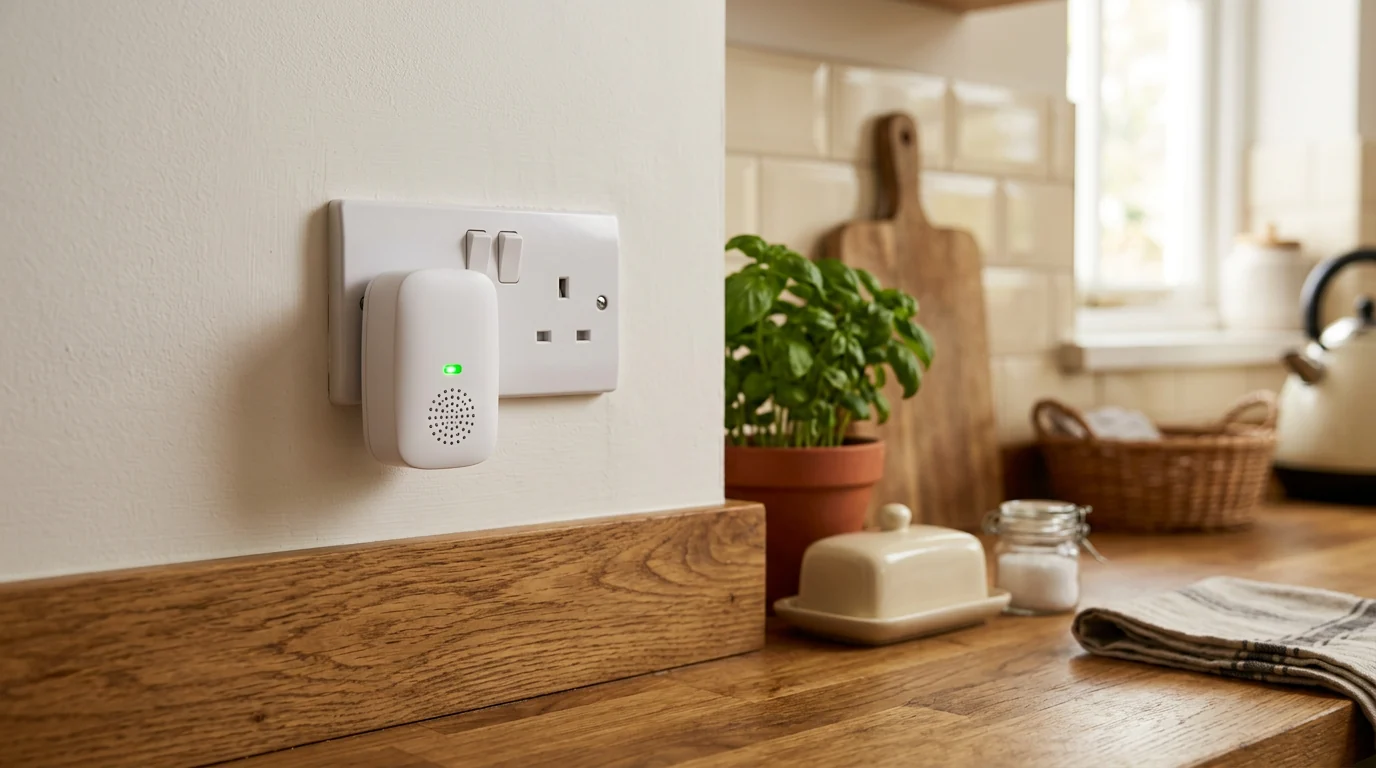
Advanced Whole-House Rat & Mouse Repeller
Plug-in ultrasonic and electromagnetic repeller designed to disturb rodents along ordinary household wiring runs indoors.
Check PriceWhy choose the solar version?
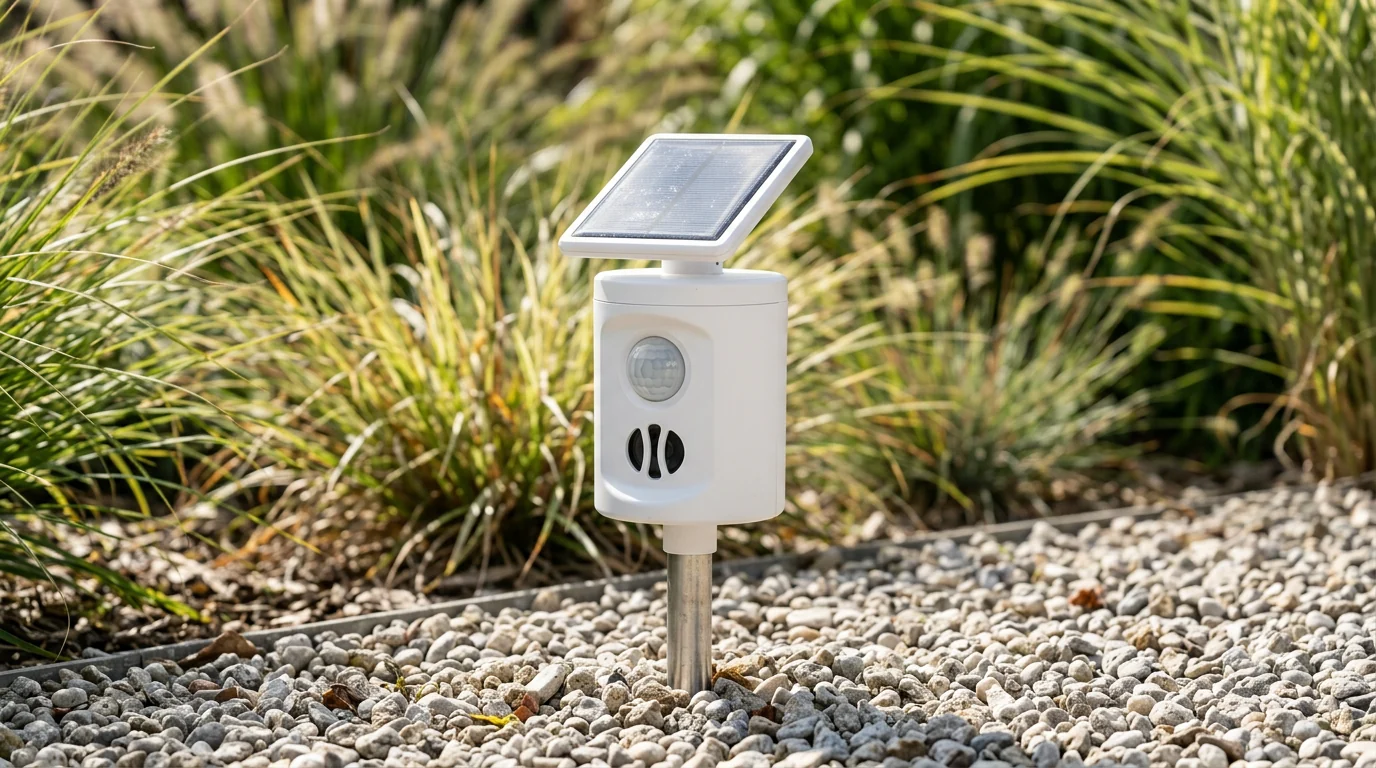
Most British gardeners who buy a cat deterrent want one thing above all else: they want to forget about it. They want to put a stake in a border in April and not think about it again until the following spring. That's the niche the PestBye Solar Cat Repeller fills. Instead of running on 4 × AA batteries like our battery-powered V2, it harvests light with a small photovoltaic panel on the top of the unit and stores it in an internal rechargeable cell.
In a typical UK location – even somewhere as damp and overcast as Manchester or the Scottish Borders – the solar panel captures enough ambient daylight to keep the unit armed through the night. You don't need direct sunshine; bright overcast is plenty. After a few weeks the unit tends to find a stable "charging equilibrium" where it is always ready to fire.
How the solar repeller works
The solar model is built around the same PIR motion sensor and ultrasonic emitter as the battery V2. When a warm body moves across the sensor's 110° arc within about 10 metres, the unit fires a short, sharp ultrasonic burst – somewhere between 18 and 24 kHz – which is irritating to cats but inaudible to most adult humans.
The solar version adds two extras:
- A tiltable solar panel that you can angle towards whichever direction catches the most daylight across the day. South-west facing is ideal in the UK.
- A rechargeable internal battery that stores energy from even short bursts of daylight, so the unit never runs flat overnight, even in December.
The result is a deterrent that really is "install once, forget about it". You don't have to pop out in the middle of winter with fresh batteries – the solar cell keeps the trickle charge topped up even under cloud cover.
Is solar enough in the British climate?
We get this question a lot, usually from customers further north. The short answer is: yes, comfortably. Modern mono-crystalline cells are remarkably efficient at capturing diffuse light, not just direct sunshine. The panel on the solar repeller is sized specifically for northern European daylight, not California. In our own tests on a cloudy West Yorkshire garden through December and January, the unit remained armed and firing reliably across the entire period.
The only real failure mode we see is when people site the unit under a dense tree canopy or behind a tall fence that shades the panel all day. If nothing else, a few hours of open sky are enough. If the spot you want to protect is deeply shaded, consider pairing a solar unit elsewhere in the garden with a battery V2 in the shaded corner.
Ideal installations
The solar repeller tends to be our top recommendation for:
- Front gardens and boundary borders, where you don't want to be fiddling with batteries on public view.
- Allotments and shared plots, where you may only visit once a week and don't want a dead battery to undo a fortnight's work.
- Holiday homes and second properties, where "arm and forget" is more or less the whole point.
- Exposed positions – the solar cell actually benefits from an open sky without dense overhanging foliage.
Siting tips
The positioning rules for the solar repeller are almost the same as for the battery model – with one crucial addition:
- Angle the panel toward the open sky. The unit doesn't need to face directly at the sun, but it should see as much daylight as possible across the day.
- Point the sensor at the cats, not the panel. Work out which way cats enter the garden, and orient the body of the unit accordingly – that's what matters for detection.
- Wipe the panel every few months. A quick pass with a damp cloth in spring and autumn keeps the solar cell efficient.
- Don't plant up against it. Fast-growing perennials can shade the panel by mid-summer; leave a palm's width of clear space above the top.
Lifespan and warranty
The rechargeable cell inside the solar repeller is rated for well over 1,000 charge cycles, which in normal UK operation works out to five to eight years of service before any noticeable drop in standby time. Replacement cells are available if you're a long-term owner. The plastic casing is UV-stabilised so it won't yellow or crack in full sun, and the IPX4 rating means everyday British rain and frost are not an issue. The unit comes with a two-year manufacturer's warranty.
Comparison with the battery model
If you are deciding between the two, a rough rule of thumb: pick the battery V2 if you need extra power at a specific flagship spot, or if the position is heavily shaded. Pick the solar repeller if you want a set-and-forget perimeter deterrent and you have a reasonably open sky. Many customers use both: the solar unit watches the fence-top entry, the battery unit watches the flower bed the cat keeps digging.
Summary
A well-sited PestBye Solar Cat Repeller is the closest thing the market has to a truly install-and-forget humane deterrent for UK gardens. It's the right choice if you care about not handling batteries, if you want a greener option, or if you simply cannot be bothered to check a device every few months. Combined with careful placement and, if needed, the Jet Spray for really persistent visitors, it delivers a tidy, calm garden all year round.
Set it up once. Enjoy your garden again.
Pair the right deterrent with the right sensor placement and British gardeners consistently see a calmer, tidier garden within a fortnight.